The DHA Fit-Out and Licensing Requirements That Kill Healthcare Property Deals
An ordinary commercial unit does not become a clinic just because you spend money on it. The four approvals, the March 2026 space standards, and where healthcare fit-out projects actually fail.
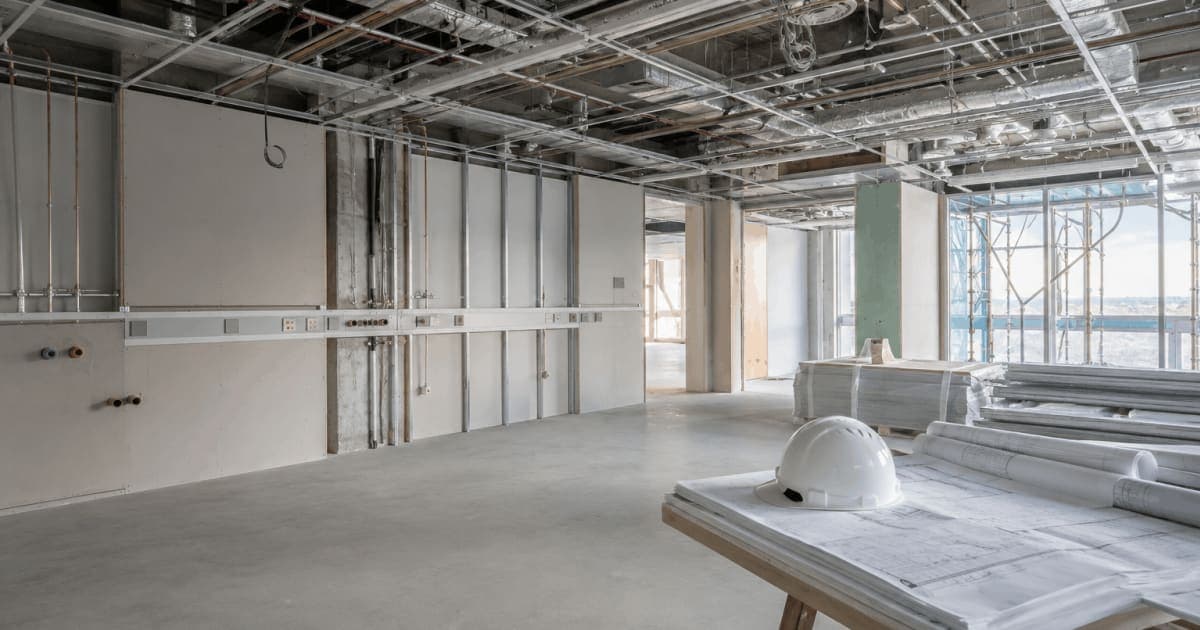
The unit was ideal. Ground floor, corner position, generous frontage, a landlord willing to negotiate. The buyer signed, started fit-out, and then discovered that the escape route configuration would not pass Civil Defence for a healthcare occupancy.
That project lost several months and a meaningful amount of capital, and none of it was visible in the lease. Compliance gaps of exactly this kind, where premises lack the technical medical specifications and regulatory approvals they need, are among the most expensive surprises in this asset class.
Why an ordinary commercial unit is not a clinic
Retail and office space is approved for retail and office use. A healthcare facility is a regulated occupancy with requirements that touch structure, services, circulation and hygiene. The distance between the two is not decoration. It is drainage, ventilation, fire strategy, room dimensions, waste segregation and, depending on the service, medical gas and radiation shielding.
A shell unit does not become compliant because you spend money on it. It becomes compliant because it can physically accommodate what the standards require, and some units simply cannot.
The four approvals, and why the order matters
Opening a clinic in Dubai requires approvals running simultaneously from four bodies:
- Dubai Municipality for building and construction consents
- Civil Defence for fire and life safety
- The Dubai Health Authority for the facility licence, via the Sheryan portal
- The Department of Economy and Tourism for the commercial licence
Each assesses a different thing, and they do not coordinate on your behalf. A layout that satisfies DHA room-size expectations may fail Civil Defence on travel distance to an exit. Resolving that usually means redrawing the plan, which means going back to the beginning of more than one queue.
This is the practical reason to have a healthcare-experienced designer produce a compliant layout before you commit to a unit, rather than after.
Where deals actually die
Space standards
The DHA updated its minimum space standards for clinics and pharmacies in March 2026. If you are evaluating a facility that was fitted out under earlier requirements, the relevant question is not whether it was compliant when built. It is whether it is compliant now, and what it would cost to close the gap.
For a buyer, that gap is a price adjustment. For a buyer who does not check, it is an unbudgeted capital call.
Fire strategy and means of escape
Healthcare occupancies carry different assumptions about how quickly occupants can evacuate, and those assumptions drive exit widths, travel distances, door swings and compartmentation. This is the requirement least likely to be solvable by spending more money, because it is often determined by the shape of the building.
Services that ordinary units do not have
- Medical gas where the service model requires it, including storage, distribution and alarms
- Clinical waste segregation, storage and contracted disposal
- Radiation shielding for imaging, which has structural implications and its own approval path
- Ventilation appropriate to procedure rooms rather than to offices
NABIDH connectivity
Dubai operates NABIDH, a unified electronic medical record platform, and facility licensing requires compliance with it. This is a systems and information-governance obligation rather than a construction one, but it is a licensing condition, which means it can hold up an otherwise finished project. Buyers should confirm the current integration status rather than assume it.
A pre-offer checklist for a shell unit
Before you commit to a space you intend to convert:
- Have a healthcare-experienced designer test a compliant layout against the actual floor plate
- Confirm the building's fire strategy can accommodate a healthcare occupancy
- Establish whether the landlord will permit the structural and services work required
- Check ceiling void depth and riser access, which quietly determine whether the mechanical design is feasible
- Price the fit-out against current standards, not against a generic per-square-metre assumption
- Build the approval timeline into your rent-free period, because rent starts whether or not you are licensed
If you are buying an operating facility instead
A licensed, operating clinic removes most of this risk, which is a large part of why such assets carry a premium. It does not remove all of it. Confirm that:
- the licence category matches the clinical activity actually taking place
- there are no open violations, appeals or suspensions, since these can render a change of ownership application ineligible outright
- the fit-out meets current standards rather than those in force at construction
- any alteration you are planning will not reopen a Municipality or Civil Defence approval
What to put in the contract
Diligence tells you where the risk is. The agreement is where you allocate it.
- Make completion conditional on the licence transfer being approved, not merely submitted
- Warrant the absence of open violations and appeals, with a specific indemnity
- Retain part of the consideration against identified remediation until it is done
- Where the deal depends on landlord consent to assignment, obtain it in writing before exchange rather than after
Regulatory friction in UAE healthcare is not an obstacle to investing in it. It is a substantial part of why licensed operating facilities hold their value. The buyers who do well are the ones who price that friction accurately instead of discovering it during fit-out.

Written by
Dr. Asmaa Al-NajjarFounder, MedProp
Dr. Asmaa Al-Najjar is the founder of MedProp, the strategic arm of MedStream. She combines a medical background with strategic economic expertise, and established MedProp to bridge traditional healthcare sectors with the future of digital health and investment across the UAE.